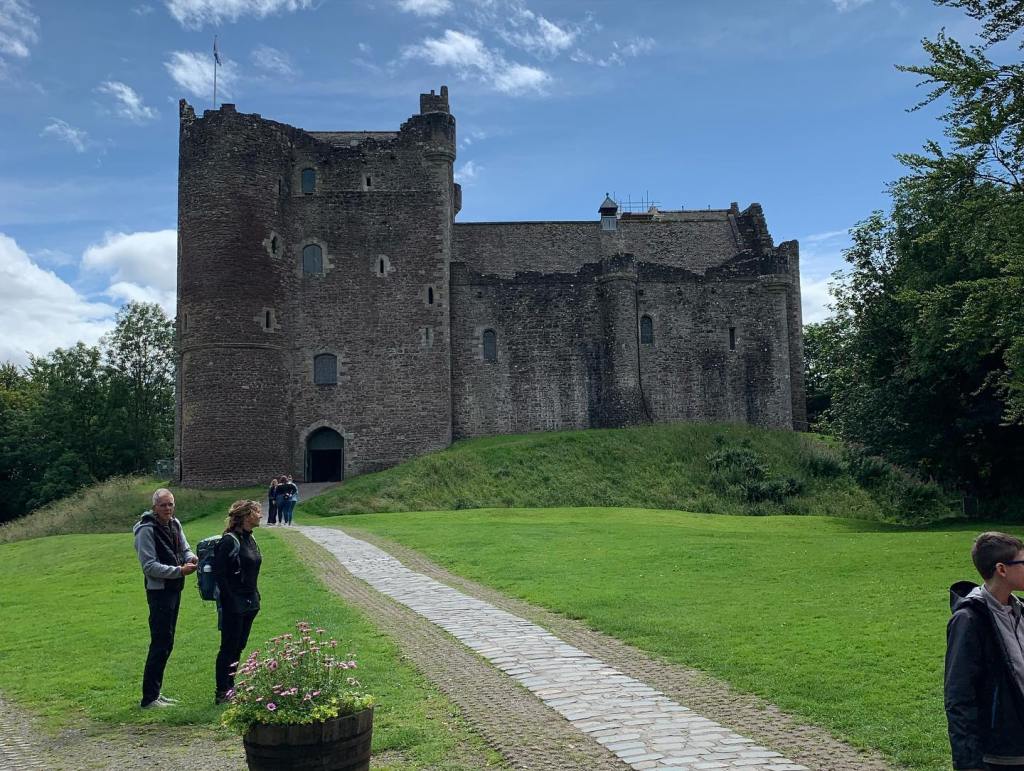
Every now and then, my academic interests and my creative impulses cross paths. This was the case in 2023, when I attended the First Outlander Conference at the University of Glasgow in Scotland. This conference was such an incredible experience of fellowship and fun, and has been absolutely one of the highlights of my career as a Bioethicist.
I first discovered Outlander in 2014 (I know, late to the game), when I moved back to Indianapolis from Chicago. One of my oldest and dearest friends Susan invited me to her house for the premier of the series on Starz, stating that Outlander was her favorite book of all time. I watched the first episode, thought it was exceptional, but didn’t have a subscription to Starz, so went about my way. A few months later, I recalled that episode and watched the first half of the first season (all that was out at that point). When I reached the end of the episodes–Jamie perched on a windowsill telling Black Jack to take his hands off [my] wife–I nearly fell off the couch.
That’s it? What the fuck? What happens? Where’s the rest of the fucking season?
I promptly bought the first book, and then the second, and then the third, and… well, you get the idea. I had the full Outlander experience–book-boyfriend swoons, hours spent with no human contact because: I’M BUSY READING!! I suddenly saw strands of my own family’s history. Most closely connected to the Swedish side of my family, I was now curious about the Knoxes and Dorsets who had settled in South Carolina in the 1700s.
So when the University of Glasgow announced that it would hosting the first ever Outlander conference in 2020, you can bet your plaid ass, I submitted a paper. I could tell from the Call for Papers that the conference was attempting to balance academic rigor with a very enthusiastic fandom, and I submitted an idea I’d been thinking about for a while: That the Claire Beauchamp Randall Fraser Randall Fraser Grey Fraser of the books was not the dogmatic adherent to the deontological Hippocratic oath that the television adaptation made her out to be; rather she was inclined to sympathy, acting in a manner typical of the emotivism of the Scottish Enlightenment and embraced by 18th century Scottish physician and author of the first medical ethics text, John Gregory of Edinburgh. The paper was accepted, and I prepared for my first trip to Scotland. And then…
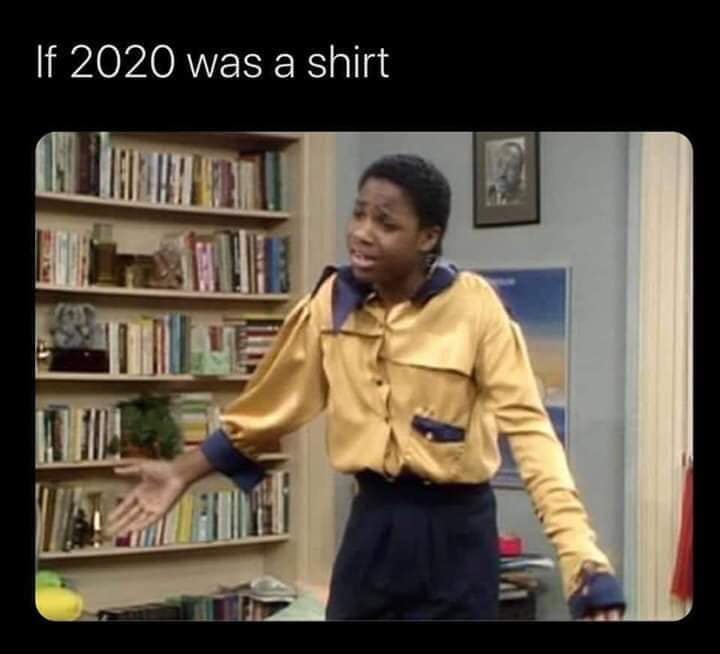
COVID happened.
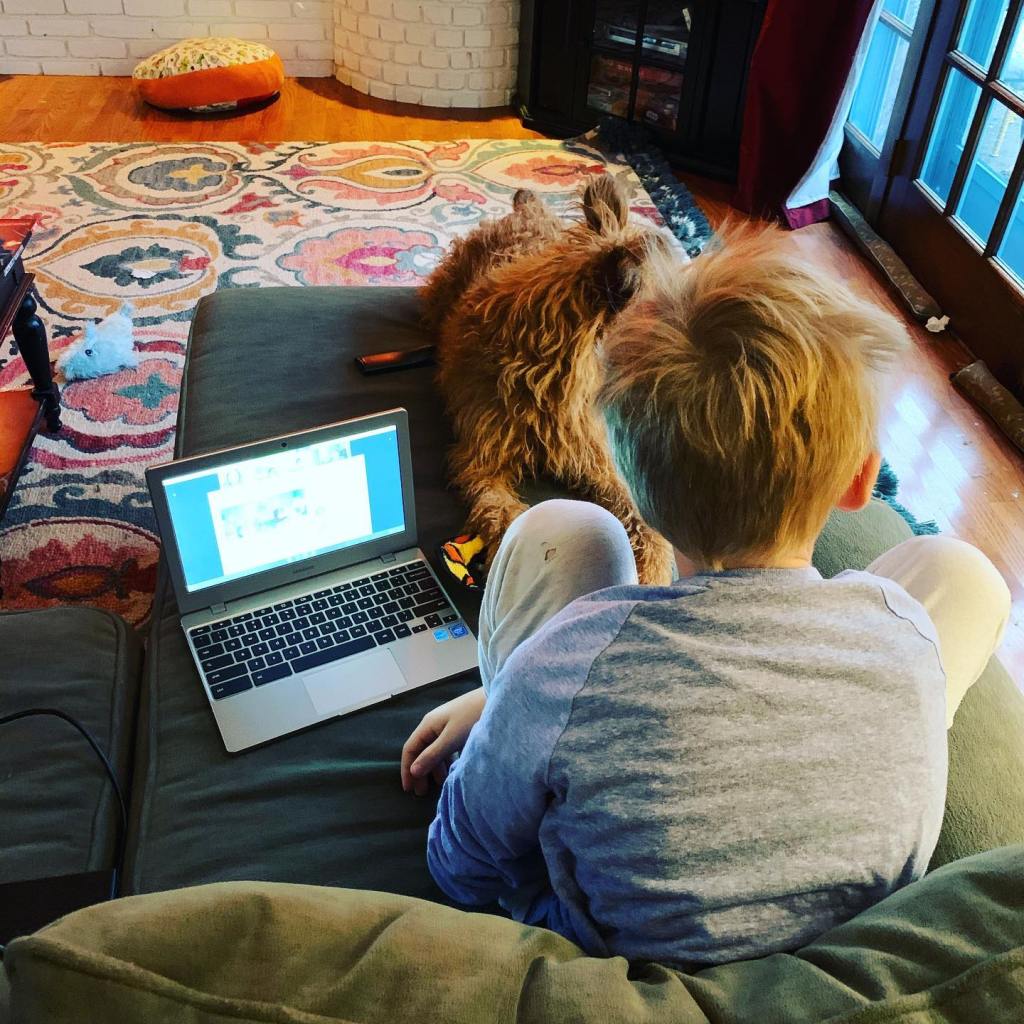
(My son (8 years old at the time) and our dog doing a Spanish lesson. April 2020.)
There were times when I thought it would never end.
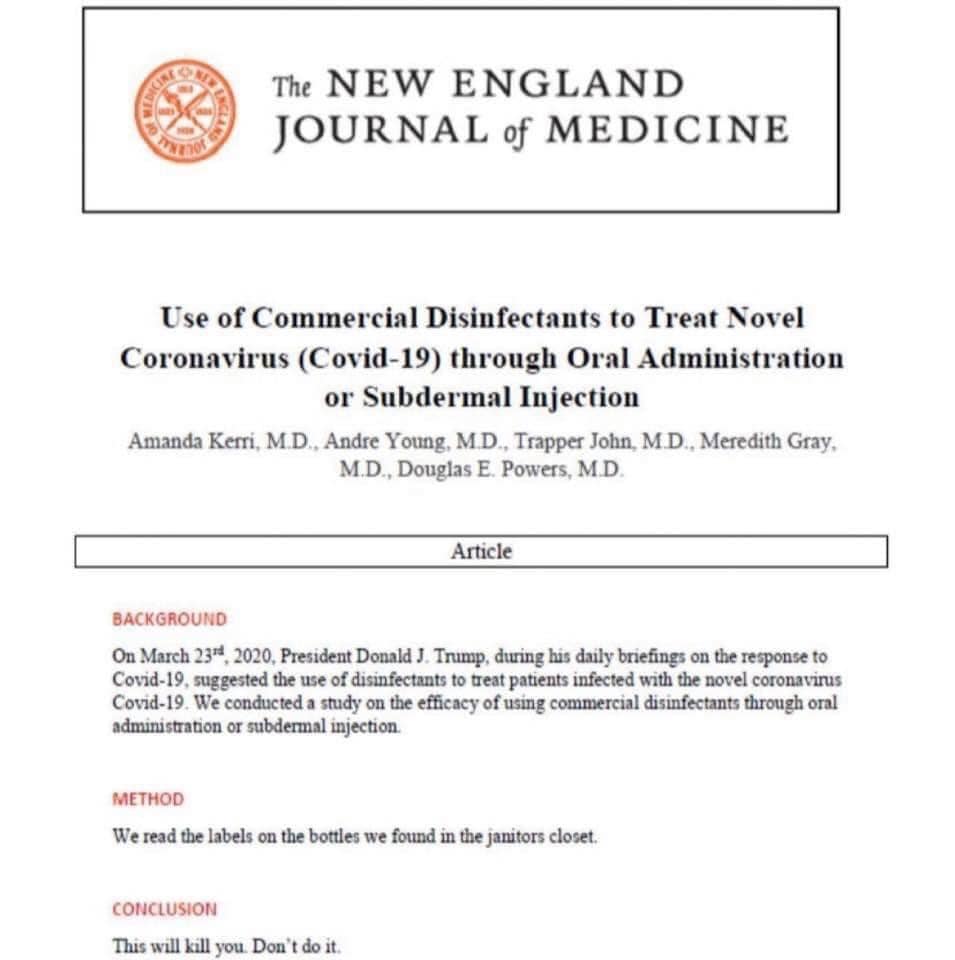
By June 2020, the conference was postponed (indefinitely) and all of my attention turned to managing the resource triage/allocation in the academic health center where, at the time, I was the director of clinical and organizational ethics, and transitioning to online teaching at the university where I teach in the medical humanities program.

I checked in with the conference website periodically, but saw only that it was postponed (still) and assumed it would eventually be canceled.
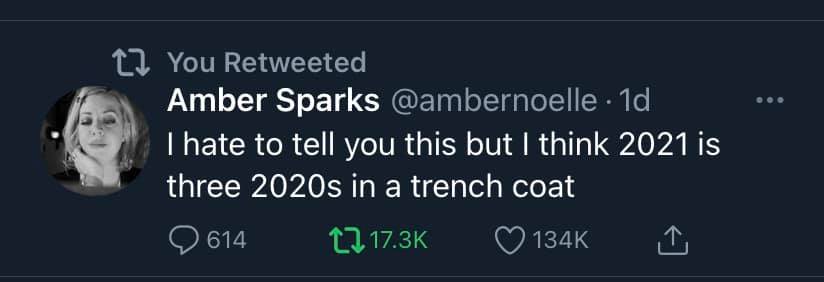
Then, in late 2022, as the world emerged from the worst that the pandemic would deliver, I received an email: The conference was back on. Shortly after presenting my paper, an anthology was announced, and I submitted my paper for inclusion.
While my paper’s topic is relatively narrow, as this forthcoming anthology demonstrates, Outlander’s influence is far reaching. This series has impacted everything from tourism in Scotland, to conversations about fiction as a vehicle for counter-narratives. It was an absolute joy to be a part of this conference, and I am honored to be included in the forthcoming anthology more than 10 years after Susan said, “I think you would really like these books.”
 Hartsock books
Leave a comment